Venerable Kitahara Satoko, the Hero of Ants Town

Kitahara Satoko* kept a box of newspapers and magazines that reported on her charitable work with the children from a homeless village called Ants Town. The articles’ headlines dubbed the 22-year-old Catholic convert “Mary of Ants Town”—much to Satoko’s embarrassment and delight, as she later confessed.
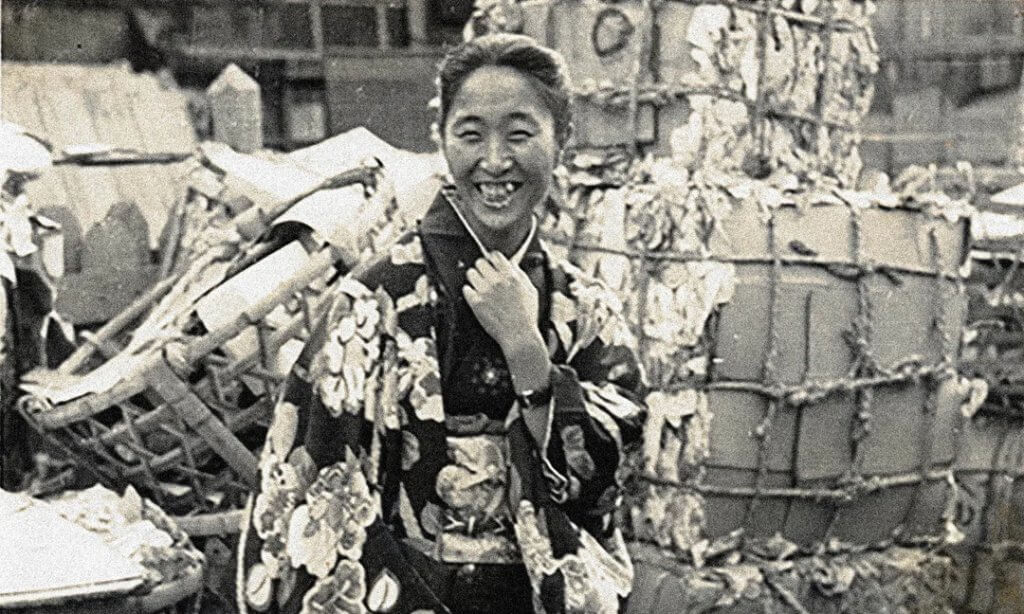
Born August 22, 1929, Satoko was the artistically-inclined daughter of an esteemed Tokyo family. Drawn to the truth of Catholicism at age 20 by the beauty of self-sacrificial love she saw embodied in the Mercedarian sisters who catechized her, she wanted to dedicate her life in service to others, too. So, she volunteered at Ants Town—a village of ragpickers near her wealthy family home—tutoring the children, leading them in the Rosary, and teaching them hymns on her family piano. She even came to practice the trade of “ragpicking,” leading the children on scrap collecting excursions to raise money for the community; for this, Satoko made national headlines.
Soon, however, Satoko’s tuberculosis worsened, forcing her to take frequent breaks from Ants Town. Admittedly angry at and jealous of those who replaced her, she detected vanity in her heart.
Around this time, a priest asked Satoko to collect articles published about her, to share her witness with his community. She initially kept the articles for him, but realizing that they had become an idol of her own reputation and fame, Satoko took them to her garden and, one by one, lit them on fire.
With this striking act, Satoko proclaimed that she counted her reputation as nothing before God. Detached from these superficial riches, she was free to more fully receive and dispense the riches of God’s love to those around her. Thus, as her health continued declining, Satoko wrote:
I feel my path to heaven will be a long and painful one. I do not intend to work just for my own eternal salvation, closing my eyes to the people around me. No, I want to offer God many beautiful sacrifices so that I may help others avoid the pains of hell, and reach Him in heaven.
(Kitahara, quoted in Paul Glynn, The Smile of a Ragpicker, 183)
This desire—to allow her suffering to become an offering of love for others—eventually led to Satoko permanently residing in Ants Town. She lived her final four years as one among the community, dedicating herself prayerfully to those around her as the settlement secretary, striving to always smile at those she encountered.
Satoko, the rich-girl-turned-ragpicker, died of tuberculosis at age 28 in Ants Town, poor and happy. Because of her influence, many residents, as well as her own family, were baptized. Prayer became a settlement staple, proclaimed daily over the intercom, and a Lourdes Grotto was built near Satoko’s room.
In the end, Satoko bore in herself the beauty which first attracted her to the faith. This beauty is not pure aesthetics, but Jesus Christ Himself, who revealed on the Cross that the truth of beauty encompasses suffering and death. The realization of beauty, then, lies not in escaping suffering and death but in accepting these realities and entrusting them to Christ, who makes them a means of redemptive love.
For Satoko’s life to image Christ the Beautiful, she first had to reckon with her own vanity, as she wrote:
[F]rom childhood, we have been taught to think highly of ourselves, believing we have done something truly good merely by occasionally making small donations or visiting the poor, all under the name of “charity.” Reflecting on it now, what a dreadful “morphine for the conscience” that was. Just as no illness can be cured by a numbing agent alone […] self-satisfied “charity” alone will never eradicate poverty from this world.
(Kitahara, Children of Ants Town, translated by Shannon Saruwatashi, 109)
Her words echo those of Pope Leo XIV, who recently said that “the cult of self-image” is “nothing more than anesthetics designed to numb our conscience.” The solution then—as Venerable Satoko shows us—is to return to the Garden of our existence and light aflame all the little idols we hold onto, reconciling ourselves to the God whose beauty is revealed through the offering of His life for ours. For, in and through and with Him, we find one another.
Venerable Kitahara Satoko, pray for us.
* Satoko is her given name, and Kitahara is her family name; in Japan, the family name comes first.

More By This Author
- Corynne Staresinic
- Corynne Staresinic
- Corynne Staresinic

Subscribe to the Ember
Weekly news from around the Archdiocese
Stay connected to our vibrant Catholic community! Sign up to receive our weekly digital newsletter The Ember. We’ll keep you informed and inspired with local news, fellowship opportunities, and event reminders.