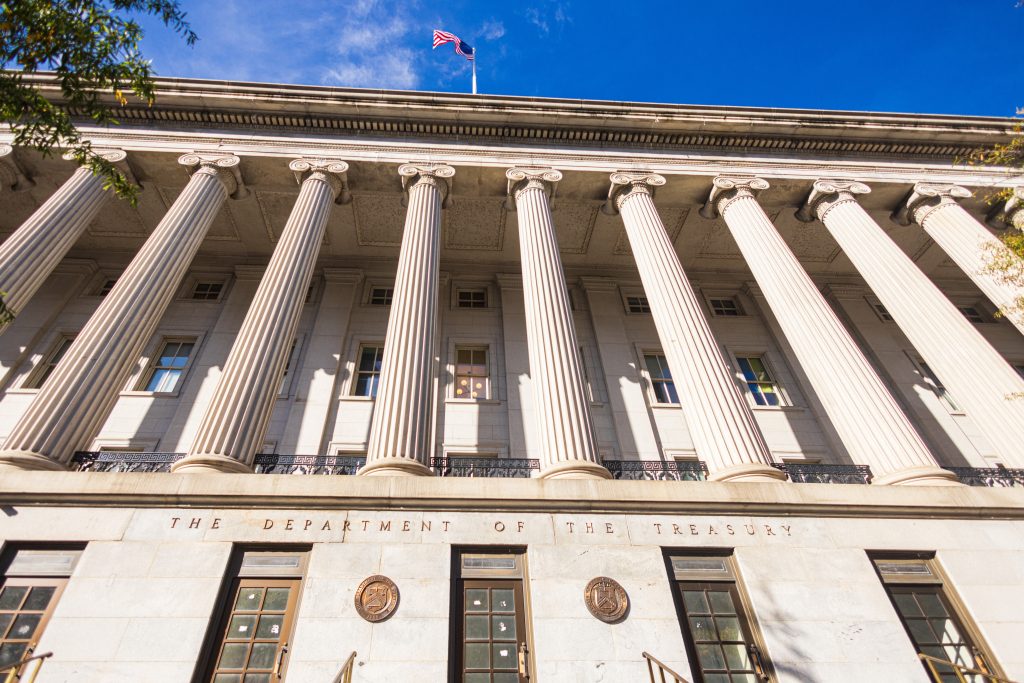

Following a federal judge’s dismissal of a lawsuit challenging the Johnson Amendment, the U.S. Treasury Department and the Internal Revenue Service (IRS) have announced that they plan to issue additional guidance on the law’s application to religious organizations.
The case, National Religious Broadcasters v. Bessent, was filed in August 2024 by the National Religious Broadcasters, two Texas churches, and Intercessors for America.
Plaintiffs argued the 1954 Johnson Amendment, which bars 501(c)(3) nonprofits from endorsing political candidates, violated the First Amendment and other protections.
On March 31, U.S. District Judge J. Campbell Barker dismissed the case for lack of subject-matter jurisdiction, citing the Tax Anti-Injunction Act and the Declaratory Judgment Act.
The forthcoming guidance “will provide clear, administrable standards for houses of worship, including how the law applies to certain communications made within the context of religious services,” according to an April 3 press release from the Treasury Department.
“Religious liberty is foundational to our Constitution … Treasury and the IRS will provide additional clarity and guidance to houses of worship that reflect these ideals and uphold the First Amendment,” Treasury Secretary Scott Bessent said, noting the administration’s commitment to protecting religious freedom.
In July 2025, the Trump administration had agreed to a proposed consent judgment with the plaintiffs that would have allowed certain religious communications about electoral politics from the pulpit.
That agreement was never approved by the court, however.
Last summer the U.S. Conference of Catholic Bishops reiterated that, despite that agreement, the Catholic Church will continue its long-standing policy of not endorsing or opposing political candidates.
The Johnson Amendment remains in effect for now, though the new guidance, which is expected later this year, could offer churches more clarity on permissible political speech during religious services.