Validity of Baptism

The priest who baptized me has left active ministry and no longer functions as a priest. Does that invalidate my baptism?
Early in its history, the Church struggled with the question of whether a sacrament’s validity was impacted by the minister’s personal faith, devotion or moral state. Some argued that if the one administering the sacrament was not faithful, the sacrament could be invalid and need to be repeated. The Church discerned, however, that Christ is the true minister of the sacrament, and the validity of sacraments administered are not impacted by the priest’s status, either at the time of the sacrament or after.
CONTROVERSY
During the persecution of Christians in the Roman Empire in the third and fourth centuries, many Christians, including some bishops and priests, renounced their faith rather than suffer persecution.
A particular group, under the bishop Donatus, questioned whether the sacraments administered by these “lapsed” clergy were valid. They believed the sacraments were only valid if performed by those who had not betrayed the faith during persecution. Refusing to recognize such clergy, the Donatists formed a separate community, which they considered the true and pure Church administered by supposedly sinless clergy.
St. Augustine opposed Donatus and argued that the Church was a “mixed body” of believers—both holy men and women and those who fell short. All were members of the Church, not through their own merits, but through Christ’s. The sacraments, therefore, did not depend on the clergy’s moral purity but on the action of Christ himself, working through the sacramental rites and the Church’s imperfect ministers.
CHRIST AND HIS MINISTERS
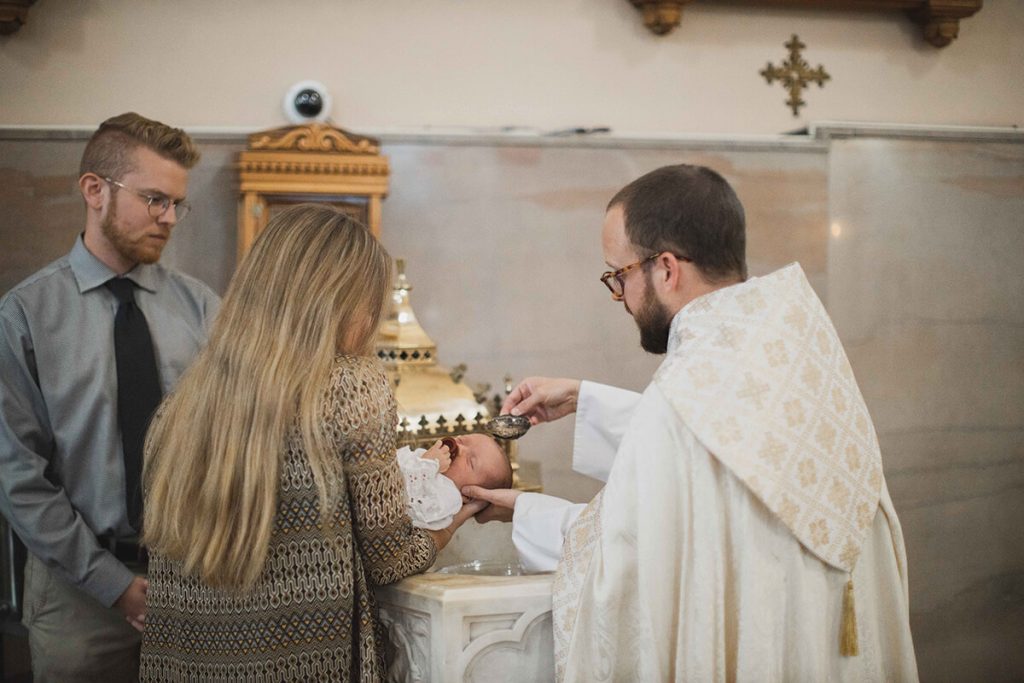
The Church adopted an understanding of the sacraments known as ex opere operato, which means “from the work [sacrament] worked.” This indicates that the sacrament’s effectiveness comes from the sacrament itself, provided that the proper form, matter and intent are present. For instance, for valid baptism, the person must baptize with water, use the correct words (“Trinitarian Formula”) and share the intention of the Church in baptizing. For other sacraments, including
Eucharist and confirmation, a proper minister (ordained and with the bishops’ permission) is required.
Christ works through the ritual actions He established on earth, knowing that those who ministered in His name—including the apostles—would not be sinless. Even the first generation of Christian ministers “lapsed,” with Peter abandoning the Lord before being reconciled to Him after the resurrection.
STRIVING FOR SANCTITY
While Christ can work through sinful persons, this is not an excuse for sinfulness in the priesthood. Clergy are called to strive for sanctity. “The shepherds of Christ’s flock must holily and eagerly, humbly and courageously carry out their ministry, in imitation of the eternal high Priest…. They ought to fulfill this duty in such a way that it will be the principal means also of their own sanctification” (Lumen Gentium, 41).
The presence of virtuous and holy priests is a better witness to Christ and His presence in the Church and the world. As the Church taught at the Second Vatican Council, “Although divine grace could use unworthy ministers to effect the work of salvation, yet for the most part God chooses, to show forth his wonders, those who are more open to the power and direction of the Holy Spirit” (Presbyterorum Ordinis, 12).
While the moral character of a priest does not invalidate a sacrament, it does not lessen the priest’s call to be a more worthy minister of the sacraments that he administers in the name of Christ.
This article appeared in the February 2025 edition of The Catholic Telegraph Magazine.
More By This Author
- Fr. David Endres
- Fr. David Endres
- Fr. David Endres

Subscribe to the Ember
Weekly news from around the Archdiocese
Stay connected to our vibrant Catholic community! Sign up to receive our weekly digital newsletter The Ember. We’ll keep you informed and inspired with local news, fellowship opportunities, and event reminders.